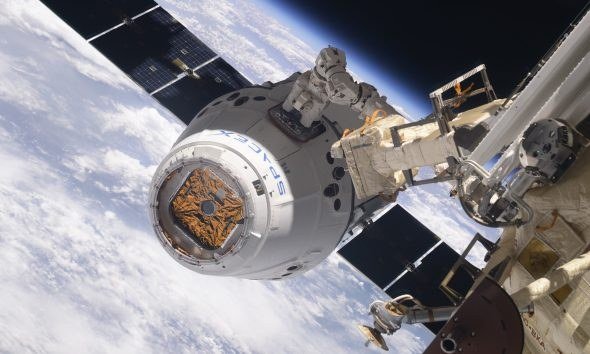
The International Space Station has taken delivery of its final power upgrade. NASA reports that a SpaceX Dragon spacecraft docked autonomously to the space-facing port of the station's Harmony module at 10:27 a.m. EDT, delivering more than 6,300 pounds of food, supplies and scientific equipment for the Expedition 75 crew.
The flight is SpaceX's 35th commercial resupply mission for NASA. It launched aboard a Falcon 9 rocket from Cape Canaveral Space Force Station in Florida, and among its cargo is the final set of International Space Station Roll-Out Solar Arrays, scheduled for installation later this fall.
The science manifest reads like a tour of medicine's frontiers. The Dragon carried equipment for manufacturing artificial retinas in microgravity to help restore vision, 3D heart-tissue models for large-scale drug testing, materials to study how a new type of glass forms in space, and brain organoids that could reveal treatment targets for neurodegenerative diseases including Alzheimer's, Parkinson's and multiple sclerosis.
NASA says the spacecraft will remain at the station until mid-November, then return to Earth with time-critical research and cargo, splashing down off the coast of California.
Thirty-five missions in, cargo Dragon flights can look routine. This one closes out a multi-year upgrade of the station's power system while stocking it with experiments aimed squarely at diseases that resist treatment on Earth — a reminder that the station's remaining years are being spent on science with direct terrestrial payoffs.