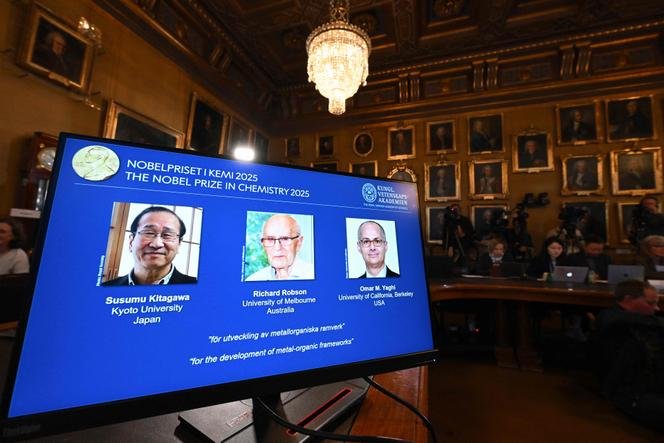
The 2026 Nobel Prize in Chemistry has been awarded jointly to French chemist Henri B. Kagan and Japanese chemist Kenso Soai for work that cracked one of chemistry's oldest puzzles: how to reliably produce just one mirror-image version of a molecule. The Royal Swedish Academy of Sciences announced the prize on Wednesday morning in Stockholm, with the laureates sharing 12 million Swedish kronor.
Kagan discovered so-called non-linear effects that showed chemists could produce a far greater excess of one mirror-image molecule than previously thought possible, a breakthrough that reshaped how researchers approach asymmetric synthesis. Soai went further, designing the first chemical reaction that formed only one of the two mirror images - the celebrated Soai reaction - demonstrating that a tiny initial imbalance can amplify itself into a pure product.
The science matters far beyond the lab. Mirror-image molecules can have radically different effects in the human body - one version of a drug can heal while its twin harms - so the ability to build molecules one-handed is foundational to modern pharmaceuticals, as well as flavors, fragrances and new materials.
The chemistry prize is traditionally the second Nobel of the week, following medicine and preceding physics, literature and peace. Kagan and Soai's recognition continues a recent trend of honoring work whose practical payoff, in drug discovery and manufacturing, is already enormous.