
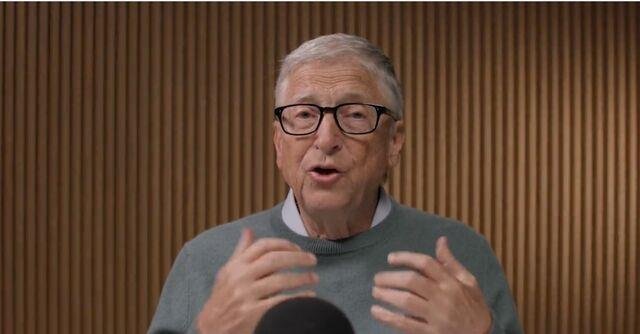
Bill Gates says society is running out of time to decide how artificial intelligence should be taxed — and which jobs should be kept for humans.
Appearing on CNN's 'State of the Union' on Sunday, the Microsoft co-founder said AI changes the world more than all previous technologies, and pointed to how quickly the models are improving and how strong the financial incentive is for employers to use AI in place of human labour. In the years ahead, he argued, governments will need to decide how to tax AI or robot usage and where human jobs should be preserved, particularly in fields such as education and health care.
The ideas build on an August essay in which Gates proposed a 'robot tax' — noting that employers pay payroll taxes on people but can usually write off robots immediately — to slow the rush away from human labour and fund retraining and a stronger safety net. He has also floated designating some roles 'Human Reserved,' arguing that workers displaced late in their careers cannot always retrain into fulfilling new jobs.
Gates said the most immediate danger is malicious use of AI, particularly for cyberattacks, and predicted that within the next year the industry will move beyond self-governance, with government safety bodies modelled on those for aviation and medicines. He said he has heard from a number of politicians and hopes in time to discuss his concerns with President Trump and his team.