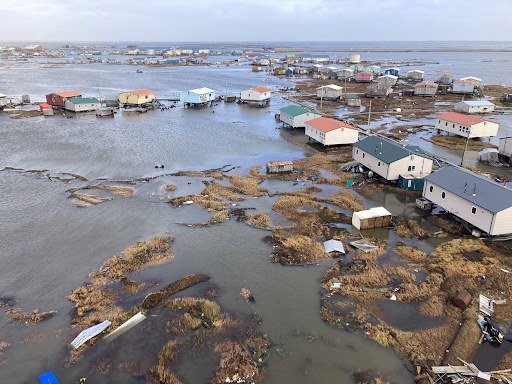
A typhoon that formed an ocean away ended in catastrophe on Alaska's western coast. The remnants of Typhoon Halong struck the state on October 12, and the floodwaters they pushed into low-lying delta communities have left scenes officials describe as devastating, the BBC reported.
Some 1,500 people have been displaced across dozens of Native villages, and in Kipnuk, near the Bering Sea, the water rose so high and so fast that dozens of homes were swept from their foundations. Kwigillingok was also hit hard. One death has been confirmed and two people remain missing. Governor Mike Dunleavy expanded a disaster declaration on Thursday to cover more northwestern communities as the scale became clear.
Rescue and recovery are racing the calendar: freezing temperatures are setting in across western Alaska, complicating both the search for the missing and the basic question of shelter for families whose homes are gone.
Officials stressed that this storm was a coastal flood disaster, not a river flood — surge water driven inland by the ex-typhoon's winds. For the delta's villages, reachable only by air and water, the weeks ahead will test how fast the rest of Alaska, and the country, can move help to some of its most remote citizens.