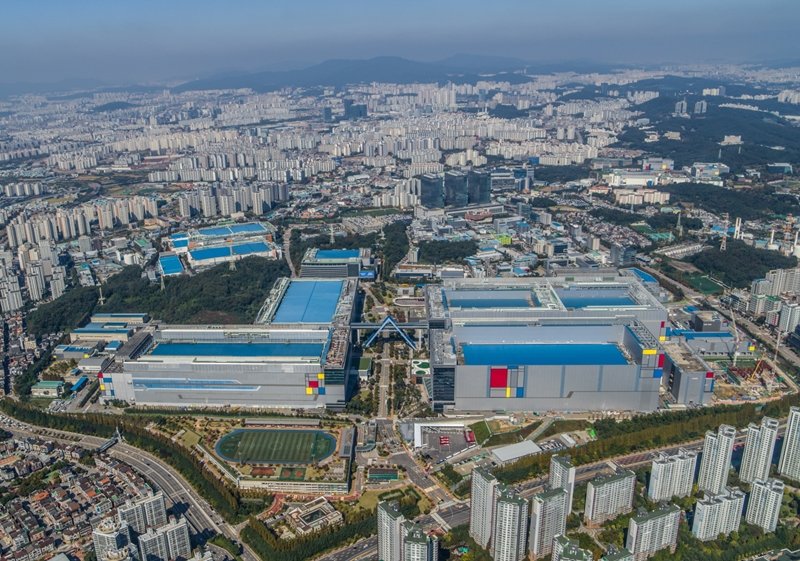
Samsung Electronics on Thursday projected its third-quarter operating profit at 107.4 trillion won — roughly $80.2 billion — topping 100 trillion won for a quarter for the first time in history, according to Reuters and the Korea JoongAng Daily. The estimate beat the market consensus of 106 trillion won and marked the chip giant's fourth consecutive quarter of record operating profit.
The driver is unmistakable: a deepening global memory-chip shortage as AI infrastructure investment outpaces supply growth, sending prices for conventional DRAM, NAND and high-bandwidth memory — the HBM essential to AI data centres — sharply higher. Samsung's revenue for the quarter is expected at 195 trillion won, up about 127 percent on year, though slightly below analyst forecasts.
For markets, the read-through extends well beyond Seoul. The same AI-memory cycle has powered record profits at SK Hynix and Micron, and investors will be watching the semiconductor supply chain — from chipmakers to the cloud providers buying up capacity — for the next leg of the trade. Chipmakers expect the supply imbalance to persist into 2028, though analysts caution that memory-price gains moderated in the third quarter, fanning questions about whether margins have peaked.
Investors get the full picture on October 29, when Samsung releases detailed divisional results. Until then, the AI-memory boom remains the earnings story to watch — a reminder that in this market cycle, the picks and shovels of the AI revolution are still the ones printing money.