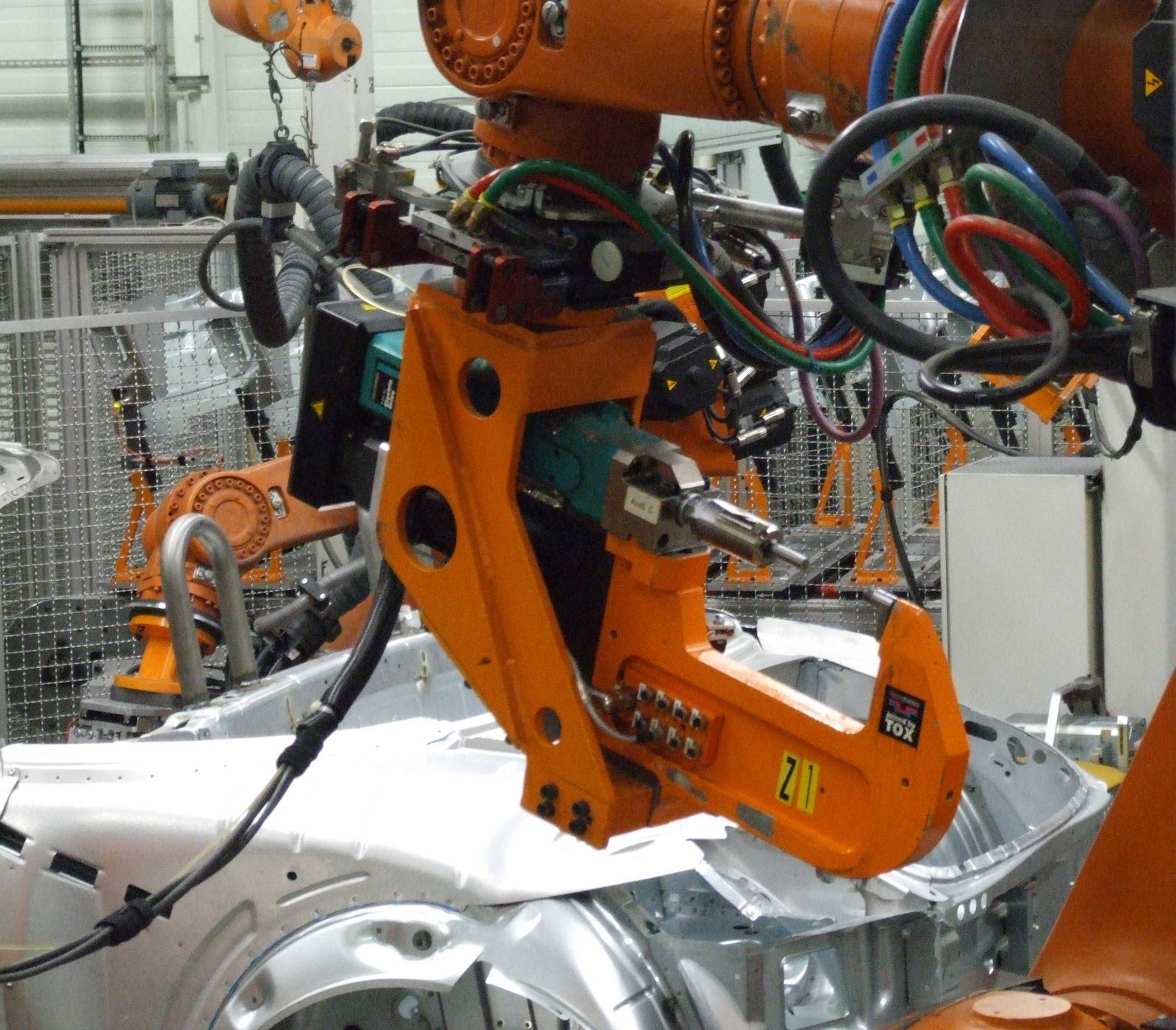
American factories crossed a line in 2025 that they had never crossed before: for the first time on record, U.S. manufacturers installed more industrial robots in a single year than they added human workers, according to the International Federation of Robotics (IFR) and an analysis of the data by Bloomberg.
The IFR's World Robotics 2026 report counted about 38,500 industrial robot installations in the United States in 2025, up 12 per cent from the year before and the third-highest annual total on record. The surge pushed the United States past Japan to become the world's second-largest robot market, behind only China. Over the same period, federal labour data showed U.S. manufacturing headcount falling for a third consecutive year, with the Bureau of Labor Statistics recording factory employment of about 12.58 million in December 2025, down from 12.69 million a year earlier.
Automotive plants remained the single biggest buyers, accounting for roughly 13,500 installations — about 35 per cent of the national total — while food and beverage factories posted the fastest growth, up 30 per cent. The United States now runs about 307 robots for every 10,000 manufacturing workers, ranking eighth in the world, well behind South Korea's 1,220. Globally, the number of industrial robots operating in factories reached a record five million in 2025, with more than 600,000 new units installed in the year.
Industry analysts say the shift is being driven by a persistent shortage of skilled workers, rising labour costs and pressure to bring production back to North America. Hundreds of thousands of manufacturing jobs went unfilled in 2025 even as factory employment shrank, and researchers note a strong statistical link between unfilled openings in one year and robot orders the next — suggesting the automation wave is filling gaps companies cannot hire for, while also raising hard questions about the factory jobs of the future.
Forecasters expect the trend to accelerate: U.S. robot installations are projected to keep climbing through the decade as plants are designed around automation from the ground up, with growing demand for the technicians, programmers and maintenance crews who keep the machines running.