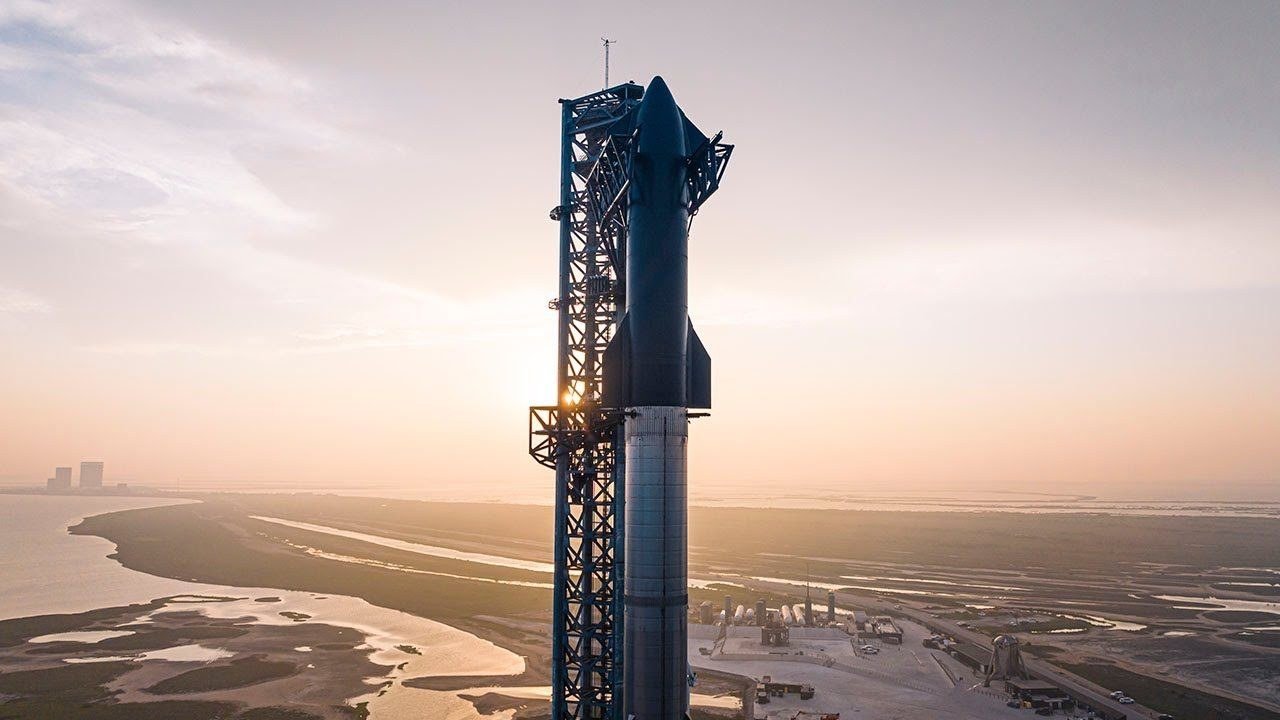
Elon Musk's companies are converging on a single week of headlines. SpaceX is readying Starship V3 — the upgraded version of the largest rocket ever flown — for launch from its new pad, while Musk's artificial intelligence venture xAI has begun training Zucchini 5, a model he publicly gives a 10 per cent chance of reaching artificial general intelligence, Tech Times reported on Tuesday, October 20.
The claims are vintage Musk in scale: tens of billions of dollars bet on AI, a new Starlink connectivity deal with a U.S. airline extending the satellite network's reach into commercial aviation, and a rocket program whose V3 iteration is meant to push Starship toward the reusability and cadence its Mars and lunar ambitions require.
The AGI remark will draw the usual split reaction — researchers who treat a 10 per cent figure as marketing, and investors who note that Musk's timelines, however elastic, have a habit of eventually producing hardware. Zucchini 5's training run, on xAI's expanding compute clusters, is at least a measurable fact beneath the rhetoric.
What links the rocket and the model is infrastructure: Starship is a machine for putting mass in orbit cheaply, Starlink is a network that monetises it, and xAI is a bet that intelligence itself is the next platform. This week's news, across all three, is Musk arguing — with other people's attention and his own billions — that they are one strategy, not three.


