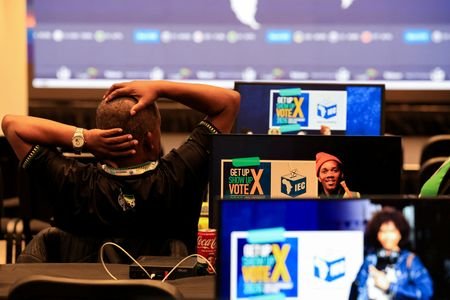
JOHANNESBURG — South Africa’s African National Congress has recorded its worst election result since the end of apartheid. With 99 per cent of votes counted in last week’s municipal elections, the ANC had about 31 per cent against 25 per cent for its main rival, the Democratic Alliance (DA), Reuters reports, with former president Jacob Zuma’s uMkhonto weSizwe party third at about 10 per cent and the rest split among hundreds of smaller parties. The Electoral Commission’s dashboard put the ANC at 30.81 per cent nationally, the African News Agency reports — almost 15 percentage points down on the 45.6 per cent it won in the 2021 municipal elections, and less than half the 64.9 per cent it took in 2006. Final results were expected to be announced at 6 p.m. on Sunday.
The collapse is deepest where most South Africans now live. The ANC holds no outright majority in any metro: in Johannesburg it has 20.27 per cent, down from 58.56 per cent in 2011, while the DA led the Johannesburg count with about 35 per cent, which could give DA veteran Helen Zille a chance at the mayoralty depending on coalition agreements. In Tshwane the ANC is at 20.22 per cent, in Ekurhuleni 22.11 per cent, and in eThekwini it fell to 16.46 per cent after a 25.6-point drop since 2021 alone. Nationally the party won 3,236 council seats, down from 4,545 in 2021, controls only 53 of 213 councils outright, and 135 councils are hung — up from 66 in 2021. Limpopo, at 54.44 per cent, is the only province where the ANC still holds more than half the vote.
The party’s own leaders are not dressing it up. ANC Secretary-General Fikile Mbalula called the result “catastrophic” but said the party would not go begging for positions in coalition talks. “When the people tell us we have fallen short… the honest answer is not to argue with them but to go home and put our house in order,” Mbalula said on Saturday, admitting that service-delivery failures over water, electricity and other basics made campaigning hard. Former minister Nkosazana Dlamini-Zuma said the leadership had to own the result: “First, we need to look at ourselves, and see where we went wrong, and correct, and self-correct.” Analysts quoted by IOL went further, calling the current leadership the product of years of maladministration and indifference — though others cautioned the ANC remains the country’s largest party and is “bleeding support” rather than on its deathbed.
What happens next is arithmetic under a deadline. Parties will have 14 days after the declaration to negotiate before new councils hold their first sittings and elect mayors, and the DA says it will initiate talks with parties committed to clean and accountable government. The ANC’s national executive is due to meet on Thursday, November 12, and its next elective conference is scheduled for December 2027 — a timetable some analysts say the result could compress, with the positions of the party’s top seven, including President Cyril Ramaphosa’s future, now openly discussed. The ANC won 57.5 per cent of the national vote in 2019 and 40.2 per cent in the 2024 general election; at 30.81 per cent, coalition government is no longer an exception in South African cities but the system itself.
Sources: Reuters report via SRN News; African News Agency / IOL (IEC results dashboard and party reaction)


